
I’ve been reading more and more about permanent jewelry and what it really is. Anything labeled “permanent” doesn’t carry much weight for me, because the word feels so final. After doing some research, I found myself with a lot of questions. Obviously, permanent jewelry is not the same as getting a tattoo. A tattoo is truly permanent—never erased or removed without serious effort. It’s a decision that must be made wisely because, realistically, it’s forever (and I have one, so I understand that level of commitment).
Permanent jewelry, however, is different. It is simply jewelry that is welded onto the body and not meant to be removed daily for activities like showering or swimming. Is it safe? That largely depends on your lifestyle, job, and everyday activities. So, what’s the purpose? For many people, permanent jewelry represents a sentimental connection to someone or something, or a way to prevent losing a meaningful piece. Having jewelry permanently welded around your wrist or neck can provide a sense of security—the belief that it won’t be lost or misplaced.
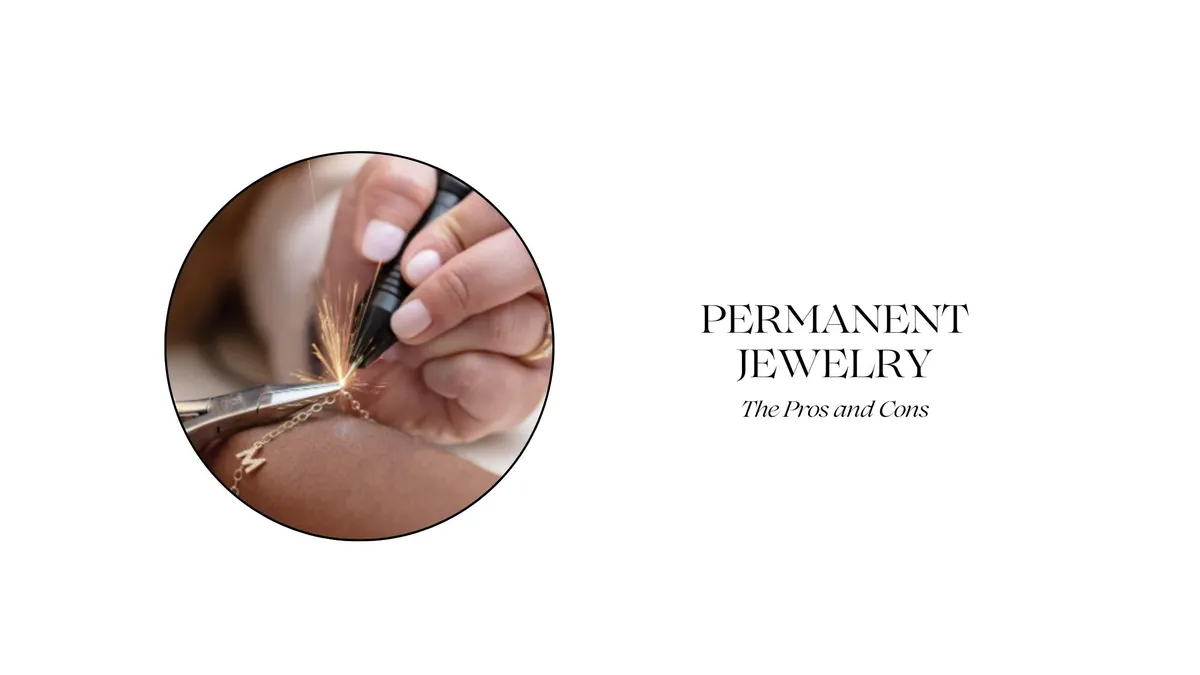
There is, of course, a process involved. You begin by selecting a piece of jewelry at a local jeweler, who measures the area and cuts the chain to ensure a precise fit. A tiny, painless pulse welder is then used to close the jump ring, creating a seamless, continuous piece of jewelry.
High-quality metals are typically used for permanent jewelry, including 14k solid gold, 14k gold-filled, and 925 sterling silver. Because these pieces are meant to be worn all day, every day, selecting a metal that resists tarnishing and minimizes the risk of skin irritation is essential.
One of the biggest appeals of permanent jewelry is customization. Many jewelers offer options to add birthstones, initials, or small engravable charms, making each piece personal and meaningful. Its popularity in 2026 is driven by a combination of symbolism, experience, and design. These pieces are often chosen to commemorate milestones such as birthdays, bridal celebrations, or new parenthood. Beyond the jewelry itself, the act of getting “linked” has become an experience—frequently enjoyed with friends or family at pop-up events and jewelry bars. Its clean, minimalist aesthetic also aligns well with the tastes of Gen Z and Millennial consumers.
Although it’s called “permanent,” the jewelry can be removed at any time by simply cutting the chain with kitchen scissors or wire cutters. There are also situations where removal is necessary, such as during MRIs, X-rays, or CT scans, as certain medical equipment can interact with metal. In terms of durability, high-quality solid gold chains can last anywhere from 5 to 20 years with proper care, but they are not indestructible and can break if snagged or pulled with enough force. Cost is another factor to consider, as prices typically start around $138–$150 for a standard bracelet and increase based on chain thickness and material.
Wearing gold or silver jewelry every day, all day also leads to increased wear over time. Constant exposure to water, sweat, lotions, soaps, and everyday friction can thin the metal more quickly than jewelry that is removed and cared for properly. Because these are precious metals, prolonged daily wear may result in stretching, weakening, or breakage—ultimately costing more in repairs or replacement.
When medical imaging or procedures require permanent jewelry to be removed and then re-welded, the added labor and cost can quickly add up. In my opinion, working for a jeweler and understanding the true value of precious metals makes this an important consideration. Gold and silver require proper care to maintain their integrity, and having a piece repeatedly cut off and reattached raises the question of whether the convenience of permanent jewelry truly outweighs the long-term expense—especially when compared to traditional jewelry that can be removed, maintained, and preserved more intentionally.
In the end, I don’t really see the value of permanent jewelry for myself. I prefer having the ability to remove my jewelry and care for it as needed. Sentimental or not, all jewelry—whether permanent or removable—is subject to breaking, wearing, and thinning over time. Ultimately, it comes down to personal preference and how you choose to wear and care for your pieces.
Permanent jewelry, however, is different. It is simply jewelry that is welded onto the body and not meant to be removed daily for activities like showering or swimming. Is it safe? That largely depends on your lifestyle, job, and everyday activities. So, what’s the purpose? For many people, permanent jewelry represents a sentimental connection to someone or something, or a way to prevent losing a meaningful piece. Having jewelry permanently welded around your wrist or neck can provide a sense of security—the belief that it won’t be lost or misplaced.
There is, of course, a process involved. You begin by selecting a piece of jewelry at a local jeweler, who measures the area and cuts the chain to ensure a precise fit. A tiny, painless pulse welder is then used to close the jump ring, creating a seamless, continuous piece of jewelry.
High-quality metals are typically used for permanent jewelry, including 14k solid gold, 14k gold-filled, and 925 sterling silver. Because these pieces are meant to be worn all day, every day, selecting a metal that resists tarnishing and minimizes the risk of skin irritation is essential.
One of the biggest appeals of permanent jewelry is customization. Many jewelers offer options to add birthstones, initials, or small engravable charms, making each piece personal and meaningful. Its popularity in 2026 is driven by a combination of symbolism, experience, and design. These pieces are often chosen to commemorate milestones such as birthdays, bridal celebrations, or new parenthood. Beyond the jewelry itself, the act of getting “linked” has become an experience—frequently enjoyed with friends or family at pop-up events and jewelry bars. Its clean, minimalist aesthetic also aligns well with the tastes of Gen Z and Millennial consumers.
Although it’s called “permanent,” the jewelry can be removed at any time by simply cutting the chain with kitchen scissors or wire cutters. There are also situations where removal is necessary, such as during MRIs, X-rays, or CT scans, as certain medical equipment can interact with metal. In terms of durability, high-quality solid gold chains can last anywhere from 5 to 20 years with proper care, but they are not indestructible and can break if snagged or pulled with enough force. Cost is another factor to consider, as prices typically start around $138–$150 for a standard bracelet and increase based on chain thickness and material.
Wearing gold or silver jewelry every day, all day also leads to increased wear over time. Constant exposure to water, sweat, lotions, soaps, and everyday friction can thin the metal more quickly than jewelry that is removed and cared for properly. Because these are precious metals, prolonged daily wear may result in stretching, weakening, or breakage—ultimately costing more in repairs or replacement.
When medical imaging or procedures require permanent jewelry to be removed and then re-welded, the added labor and cost can quickly add up. In my opinion, working for a jeweler and understanding the true value of precious metals makes this an important consideration. Gold and silver require proper care to maintain their integrity, and having a piece repeatedly cut off and reattached raises the question of whether the convenience of permanent jewelry truly outweighs the long-term expense—especially when compared to traditional jewelry that can be removed, maintained, and preserved more intentionally.
In the end, I don’t really see the value of permanent jewelry for myself. I prefer having the ability to remove my jewelry and care for it as needed. Sentimental or not, all jewelry—whether permanent or removable—is subject to breaking, wearing, and thinning over time. Ultimately, it comes down to personal preference and how you choose to wear and care for your pieces.